
1 min read

Henkel's first Chief Sustainability Officer steps down

Ulrike Sapiro will be replaced by Chief Procurement Officer Bertrand Conquéret as interim CSO.

Melodie Michel
Henkel's first Chief Sustainability Officer steps down
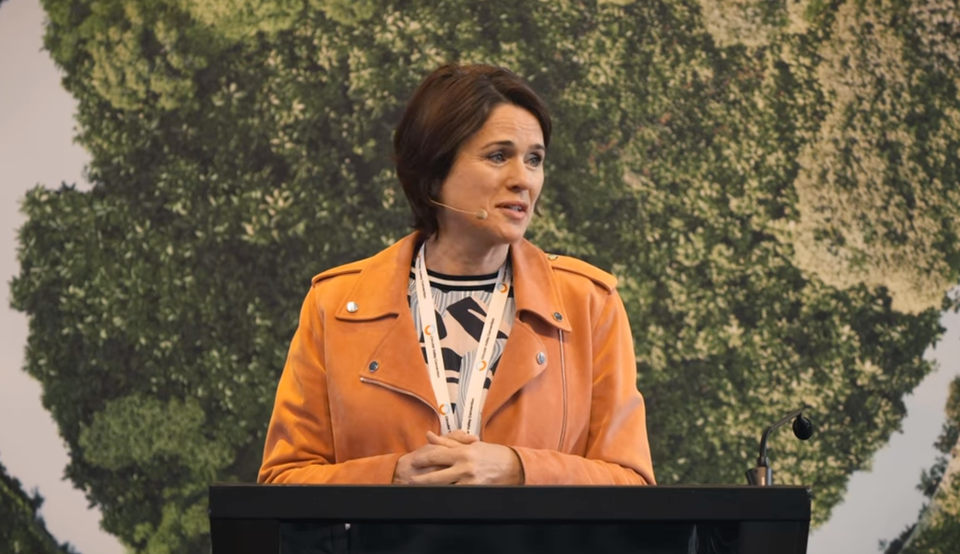
Ulrike Sapiro speaking at the Circular Valley Convention in 2025 (YouTube, Circular Valley Convention)

Henkel’s first Chief Sustainability Officer Ulrike Sapiro has announced her departure after nearly five years at the chemical manufacturing firm.

She will be replaced by Chief Procurement Officer Bertrand Conquéret as interim CSO until Henkel appoints a new sustainability leader in 2026.


Sapiro announced on Linkedin today (December 18) that she would not be returning to Henkel in the new year, without giving details about her next role.

“Together, we built on the strong sustainability legacy of Henkel to shape our shared Sustainability Ambition Framework; we advanced and partly exceeded our targets to 2025 and built a new set for 2030 (more on that next year); we built up, digitalised and professionalised our environmental data and reporting systems and we energised and upskilled our employees around the business value and purpose of sustainability.

“I am most proud, however, of the change that often remains unseen: the increasing knowledge that sustainability makes business sense, the confidence that significant progress can be achieved if you put your courage and your mind to it, the experience that collaborating takes you further and makes you better even if you have to take a few more loops to get everyone on board, and the powerful bond that's created when people follow the same purpose,” she said.

Henkel’s sustainability journey under Sapiro’s leadership

Henkel has SBTi-approved targets to reduce absolute Scope 1 and Scope 2 GHG emissions by 42% and absolute Scope 3 emissions by 30% by 2030, from a 2021 base year.

Its strategy to achieve this involves improving energy efficiency in its own operations, redesigning manufacturing processes, implementing more flexible and sustainable mobility solutions, installing solar panels and biomass boilers on manufacturing sites and leveraging biomethane and other renewable fuels. 

Regarding the company’s upstream and downstream value chain, Henkel is exploring ecodesign, low-emission materials and carbon-efficient logistics.