

Summer temperatures have brought the climate crisis to the fore – but how do we bring the heat at November’s COP31?

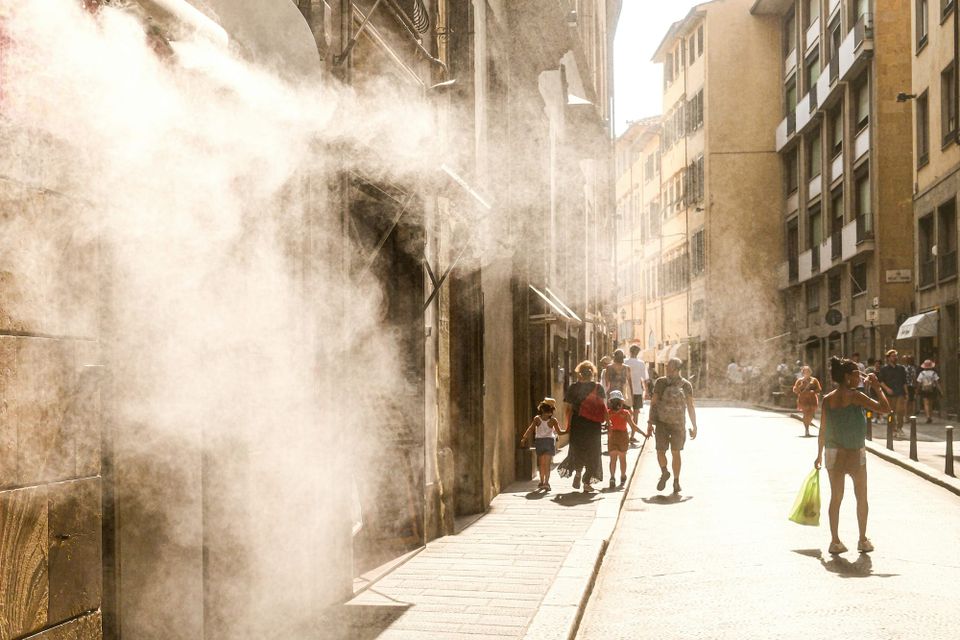
A couple of weeks ago, this year's London Climate Action Week came and went under a record-breaking heatwave. The city baked in temperatures exceeding 37ºC, in what was the second of this year’s three heatwaves so far.
Since the end of London Climate Action Week, we have achieved the grim record of being the first year in the UK weather record to reach temperatures of 35ºC or higher in each of May, June and July. These strong and prolonged heatwaves have caused discomfort, disruption and – very sadly – nearly 3,000 excess deaths.
Count this oppressive heat alongside the emergence of a ‘mind-blowing’ El Niño, and growing evidence that the Atlantic Meridional Overturning Circulation (AMOC) may be approaching its tipping point sooner than we thought, and there is no shortage of reasons to feel fearful.
It’s not just a chilling tale for us as individuals – the same is true for businesses, since we recently found that 84% of UK business leaders already report experiencing at least one direct climate-related impact in the past two years, heavily impacting their profitability. This will only worsen under the ever-more-extreme conditions we now face.
As I reflect on these past weeks, I am left with two overwhelming feelings: solemnity and determination. So in this month’s column I wanted to provide both personal reassurance to our community of CSOs that none of us face the planetary crisis alone, and also a plea to maintain this momentum of climate action into the cooler months of the year.
Extreme heat proves the UK won’t escape the sharp end of climate impacts
Arriving at the Exeter Climate Forum the week after LCAW, I was interested in sinking into the latest climate research. I would be there from Monday to Wednesday, and I was expecting a slower pace to that of LCAW – similar to last year’s Exeter conference – with environmental scientists meticulously and enthusiastically explaining their latest research, with thoughtful deep-dives into the most critical topics.
I got more than I anticipated.
On Monday, the opening plenary of the conference was interrupted by activists from Extinction Rebellion, protesting the university's choice of sponsor for the event. On Tuesday, in a panel discussion about how financial institutions approach climate risk, I heard the heart-rending testimony of one of the doctors recently acquitted after cracking the office windows of JP Morgan during the 2022 heatwave.
And on Wednesday, the conference heard that our keynote speaker for the conference’s closing plenary - Professor Emily Shuckbrugh CBE – was unable to attend because her father had died from a stroke he suffered during the extreme heat the previous week.
I found myself leaving Exeter in a solemn mindset, compounded by the exhaustion of the events season, the starkness of the climate research on display, and of course the extreme heat sapping away my remaining energy. If you’ve felt this way too, you are not alone.
Are we gaining some ground?
And yet, despite all this, it has felt over these past few weeks that the imminence and visibility of the climate crisis caused by the heatwaves all across Europe has enabled more cut-through than before – both in the national conversation and in the media.
Ironic stories about extreme heat adaptation events during LCAW which were cancelled due to the extreme heat made national news, and several sustainability leads remarked to me that friends and family members not ordinarily switched on to the planetary crisis were commenting on the extreme heat, and how it was getting worse year-by-year.
There is momentum here, and the strength and length of these heatwaves – made stronger and longer by climate change – has helped to establish it.
I believe the worst thing we could do now as CSOs and as a wider climate community is allow that momentum to wane in the run up to COP31 this November. My hope is that we can keep that momentum strong after this year’s heat dissipates. We haven’t yet reached the height of the Summer here in the UK, but we must keep one eye on the coming cooler months and ensure that the national climate conversation doesn’t die away with the summer heat.
We must keep up the pressure ‘til November and beyond
As well as our day-to-day as climate professionals, that also means stepping up as citizens – such as getting behind campaigns like the People’s Emergency Briefing to bring broader awareness to the critical issues we face and how they will affect our national security and our ability to grow food. It means having kitchen table conversations with those around us who are not yet part of the movement but are curious about how the UK climate is changing. It means letting our incoming government know how we feel about the escalating planetary crisis and how crucial it is for the UK to show climate leadership.
And when it comes to COP31, a mandate to phase-out fossil fuels is (still) the most effective way to curb emissions and limit global warming. At Ecologi we’ll be championing that — as well as a range of specific policy positions — as COP preparations get underway in Antalya.
And I will be travelling to COP31 and reporting back to our community of UK businesses to help them understand and interpret the goings-on at this year’s climate negotiations. Here’s hoping that the true impacts of climate change are still at the front of everyone’s mind when we get there.
Sam Jackson, Director of Climate Science and Impact at Ecologi
Ecologi is the UK's most trusted climate action platform for every step of your climate journey. Speak with one of their climate experts today at ecologi.com



Member discussion